
.jpg) More rumblings that EPA may move forward with regulation of greenhouse gases under its existing authority under the Clean Air Act. It appears EPA has started to rattle its saber in an effort to re-energize the cap-and-trade proposal currently in the Senate.
More rumblings that EPA may move forward with regulation of greenhouse gases under its existing authority under the Clean Air Act. It appears EPA has started to rattle its saber in an effort to re-energize the cap-and-trade proposal currently in the Senate.
Rumors Swirl that EPA May Apply New Source Review to Sources of Greenhouse Gases
 As reported in BNA and referenced in Foley & Hoag’s blog, EPA is rumored to be moving forward with application of New Source Review requirements to large sources of greenhouse gas emissions. BNA reported that EPA would likely set a trigger level of 25,000 tons of carbon dioxide or carbon dioxide equivalent emissions (other greenhouse
Ohio BAT- Changes to State Air Pollution Control Strategy Prove Daunting
.jpg) Back in 2006, while I was still at Ohio EPA, a major piece of state legislation worked its way through the General Assembly. Senate Bill 265 was developed by business groups in Ohio to address concerns with the structure and implementation of Ohio air pollution permitting programs. The main target to be fixed was the
Back in 2006, while I was still at Ohio EPA, a major piece of state legislation worked its way through the General Assembly. Senate Bill 265 was developed by business groups in Ohio to address concerns with the structure and implementation of Ohio air pollution permitting programs. The main target to be fixed was the
Clean Water Restoration Act- Federal Expansion or Restoring Protections?
 On June 18th the Senate Environment and Public Works Committee, on a vote of 12-7, passed the amended version of the Clean Water Restoration Act. The proposal is seen by some as an attempt to fix a major hole in the Clean Water Act. Others see it as a major extension of federal regulation. I see it as a State’s rights issue…
The debate over the bill has centered on whether federal jurisdiction should cover essentially all streams and wetlands. (for a discussion of the jurisdiction issue see the extended entry to this post) The hardcore supporters or detractors appear to break into two camps:
- Farmers who want the independence and flexibility to address irrigation or flooding without the need of federal permits
- Without passage the majority of streams and wetlands will be left completely unprotected leading to a complete destruction of water quality even in federally regulated waterways.
If you think I’m painting the camps too dramatically let me provide some examples. First from the protection camp (post on Blue Living Ideas).
Without CWRA, we could return to the times of the Cuyahoga River burning and the Great Lakes smelling like cesspools. The Clean Water Act is important legislation that needs restoration. It’s about birds; it’s about clean water; it’s about drinking water. CWA was intended to protect all of America’s waters from pollution, not just those that are navigable.
Now from the farmer’s perspective (post on Drovers).
Under current law, the federal government has jurisdiction over "navigable waters of the United States." However, by removing the word "navigable" from the definition, the CWRA would expand federal regulatory control to unprecedented levels – essentially putting stock tanks, drainage ditches, any puddle or water feature found on family farms and ranches—potentially even ground water—under the regulatory strong-arm of the federal government.
There are of course other perspective, such as the U.S. Chamber’s. In a letter to the Senate Committee the U.S. Chamber opposes the Clean Water Restoration Act because it fears the expansive language will be used by citizen groups to stop development projects:
It has been well-documented that deletion of the term “navigable” from the definition of “waters of the United States” could lead to the unnecessary expansion of the CWA to certain intrastate waters. The bill does attempt to address this problem by listing the specific types of waters explicitly covered by the CWA and exempting others. However, the Chamber’s primary concern is that, despite the good intentions of the Committee in negotiating a compromise, S.787 as drafted is still subject to manipulation by activist groups whose only goal is to stop development.
Lost in the debate seems to be Republican notions of federalism. When it comes to environmental protection, States seem to often loose the argument that they can craft better regulations or even be trusted to adopt any regulation at all.
The lack of trust makes groups push hard for federal regulation, which is unfortunate because State crafted water quality regulatory programs should be a much better alternative. Here are some reasons why an expanded Ohio jurisdiction over waterways and wetlands may be preferable to "putting all waters under federal protection."
- Regulations crafted at the local level– ideally States should be in a better position to address unique water quality issues that may be present in their state. Rather than one size fits all approach under federal regulations.
- One permit instead of two- If the Clean Water Restoration Act passes, anyone with development projects in the State that impacts a stream or wetland will have to get a 401 water quality certification and a 404 permit. This means all development projects face distinct regulators who may push for different outcomes to mitigate for impacts.
- Greater Flexibility- In navigating federal regulations, companies and developers often must deal with the "national consistency" argument. In other words, "we can’t be flexible in this instance because we have to worry we are setting national precedent."
- Navigation of only one regulatory structures- Water quality regulation is a complex business. It involves biological and chemical criteria. Navigating two complex regulatory structures (federal and state) bogs down business. An efficient regulatory structure can still be protective.
A state water permit program is not only a possibility, it was proposed by Ohio EPA in the fall of 2008 in response to shrinking federal regulation. The State’s proposal has met with significant resistance which has slowed the rule development process down to a crawl. However, for the reasons articulated above perhaps its worth reconsidering positions on the proposal.
Those groups opposing both the Clean Water Restoration Act and Ohio EPA’s proposed Water Quality Permit Program must realize they will not get it both ways. There is too much support for protecting streams and wetlands to have no regulatory program in place. Without a strong push for State regulation, the default will be to push for federal regulation.
To fend off federal regulation through adoption of effective state regulation, supporters must address the perception of many that State’s engage in a "race to the bottom" when enacting environmental regulation. Federal legislation like the Clean Water Restoration Act get pushed because fear by many groups that if regulation is left up to the State’s they will all compete to have the least amount of protections or requirements.
(Photo: Colin Gregory Palmer/everystockphoto.com)Continue Reading Clean Water Restoration Act- Federal Expansion or Restoring Protections?
After the Fire, the Cuyahoga River Clean Up: A Worthy Environmental Achievement Goes “Up in Smoke”
 On Monday, the Cleveland Plain Dealer had a picture (above the fold) taken 40 years ago of a man dipping his hand in the Cuyahoga River and having it covered in oil and muck. In the background is the River that was an oil and waste cesspool, devoid of any life. Everything was primed for
What U.S. EPA’s Formal Recognition of Cleveland’s Improved Air Quality Means for Businesses
Yesterday, U.S. EPA announced a proposed rulemaking to formally recognize Cleveland and nearby counties as achieving the 1997 8-hour ozone standard (.085ppb). As discussed in a previous post, this is very good news for Northeast Ohio businesses in any of the following counties: Ashtabula, Cuyahoga, Geauga, Lake, Lorain, Medina, Portage, and Summit. U.S. EPA is taking comments
Climate Change Legislation Moves Forward, But Major Issues Remain
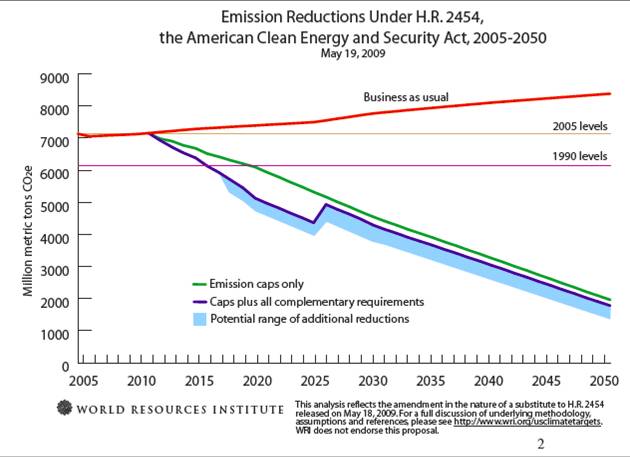 The American Clean Energy and Security (ACES) Act of 2009 has cleared one hurdle through passage by the House Energy and Commerce Committee. The bill now makes its way through at least two more House Committees before a floor vote will occur. The House leadership has set an aggressive time frame for passage, Speaker Pelosi has
Remedy in Cinergy NSR Case Forces Shut Down of Units
 As an indication the New Source Review (NSR) enforcement actions are alive and well, today an Indiana federal court has ordered the shut down of units that triggered NSR and failed to install controls. In addition, the Court required Cinergy to surrender allowances to compensate for "irreparable harm" caused by the operation of the units in violation
Major Overhaul to House Climate Change Legislation
Representatives Waxman and Markey released their much anticipated re-write of their proposed cap and trade climate legislation earlier this week. Much speculation has been offered in the media that the bill had no chance of passing as it was originally structured, if it had any chance at all.
Well, there has apparently been a lot
EPA Inspector General Reports Impact of Rapanos Uncertainty
.jpg) U.S. EPA’s Office of Inspector General released a report regarding the effects of the Supreme Court’s decision in Rapanos on enforcement of Section 404 of the Clean Water Act. The report, titled Comments Related to Effects Jurisdictional Uncertainty On Clean Water Act Implementation, contains some interesting observations and discussion. Bottomline, the lack of clarity
U.S. EPA’s Office of Inspector General released a report regarding the effects of the Supreme Court’s decision in Rapanos on enforcement of Section 404 of the Clean Water Act. The report, titled Comments Related to Effects Jurisdictional Uncertainty On Clean Water Act Implementation, contains some interesting observations and discussion. Bottomline, the lack of clarity